AI for Local Business
Electrician Answering Service: Capture Panel Upgrades, Rewires, and After-Hours Emergency Calls
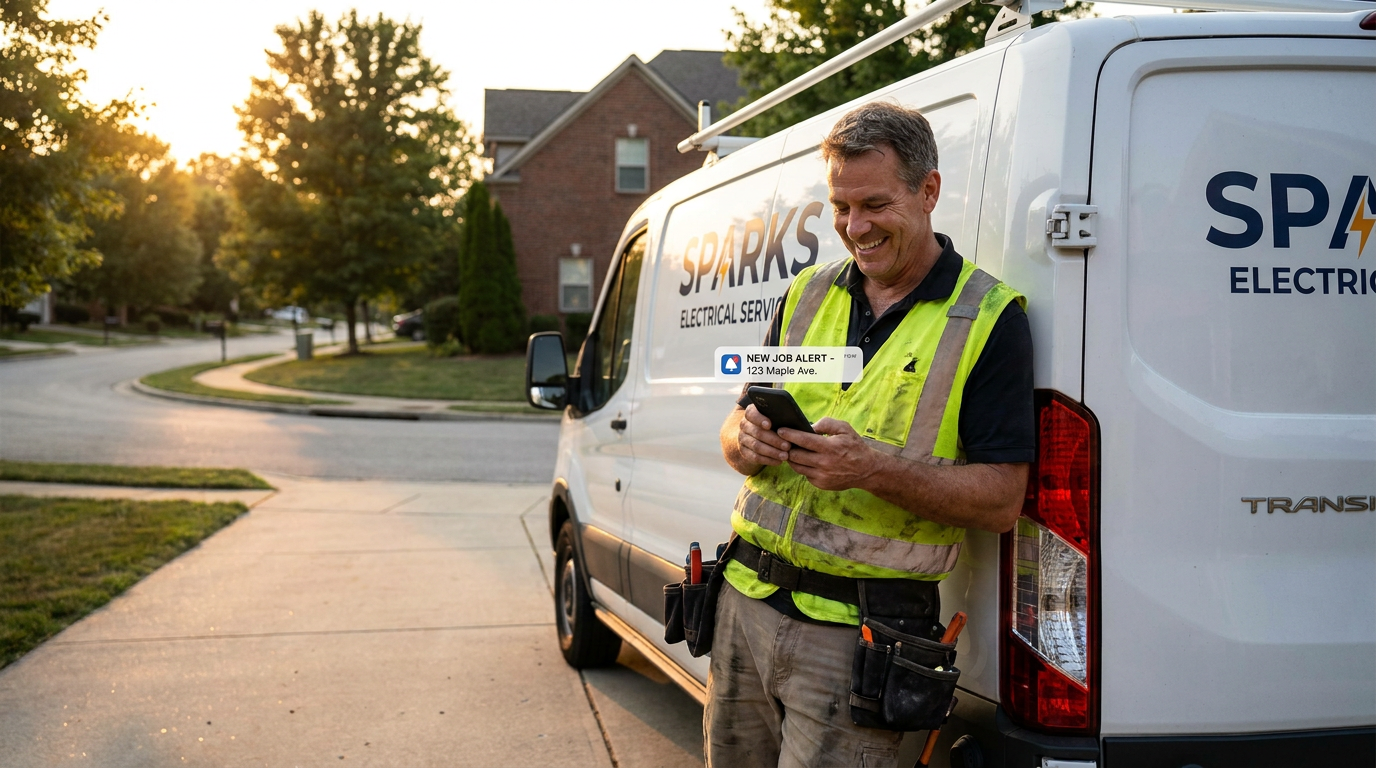
A homeowner's panel starts sparking at 8 PM. Lights flicker. Breakers trip. They search Google for electricians and start calling every number on the map. The first shop that answers books the $3,000 panel upgrade. Everyone else gets silence.
For electrical contractors running high-ticket work — panel upgrades, whole-house rewires, service upgrades, EV charger installs — missed calls are not just lost leads. They are lost revenue at scale. A single after-hours call can be worth $2,000 to $15,000. If your phone rolls to voicemail while you are pulling wire in an attic or your crew is off the clock, that job goes to the competitor who picked up. The fix is not working longer hours. It is making sure every call gets answered, qualified, and booked — whether you are on a ladder or asleep.
Why Electricians Lose Jobs to Missed Calls
Electrical work has a speed problem. When a customer calls about a sparking outlet, a tripping breaker, or a dead panel, they are not collecting three quotes and thinking it over for a week. They want the problem fixed, and they want it fixed now. Speed-to-contact research shows that the first business to respond wins the job more than 70% of the time. If your phone rings out to voicemail, you are not in that race.
The pattern gets worse after hours. Electrical emergencies do not respect your posted schedule. A homeowner realizes their service panel is overloaded at 9 PM on a Tuesday. A business owner's lights go out on a Saturday morning. A family's EV charger stops working during a holiday weekend. These are not tire-kickers. These are high-intent, high-ticket leads, and they are calling every electrician on Google until someone answers. If your line goes to voicemail, they have already moved on by the time you check messages in the morning.
Do the math for your own operation. If your average panel upgrade runs $3,000 to $8,000, and even two after-hours calls a week go unanswered, that is $25,000 to $65,000 a year in lost revenue. For a shop running three to five trucks, the annual leak can hit six figures. These are not hypothetical leads. These are real calls, from real customers, with real jobs. The only thing missing is the answer.
What an Electrician Answering Service Actually Needs to Do
A generic answering service is not built for trade contractors. The operators read a script, take a message, and pass it along. They do not understand the difference between a panel upgrade and a ceiling fan install. They cannot triage an emergency from a routine service call. They do not book jobs into your calendar — they just log a name and number, and someone at your shop has to call back. That callback delay is where you lose the speed-to-contact advantage, and speed-to-contact is how electrical jobs get won.
An answering service built for electricians needs to do more. It needs to pick up every call with a natural voice, ask what service the customer needs, confirm the address and service area, and gauge urgency. It needs to know that a sparking panel at 10 PM is an emergency and an outlet replacement inquiry can wait until morning. It needs to book jobs directly into your scheduling system so appointments land on the board automatically, not in an email someone has to re-enter by hand. And it needs to escalate true emergencies to your on-call tech with full context so they know what they are walking into before they grab the truck.
This is what Rise Desk does for electrical contractors. It is an AI phone answering system that runs on your existing number — no porting, no forwarding, no new line to print on the trucks. It answers every call, qualifies the job, checks service area, and books appointments directly into your calendar. Emergency calls get routed to your on-call electrician with all the intake details attached. Routine service requests get scheduled into the next available slot. Out-of-area calls and price shoppers get handled appropriately without wasting your time. And it all happens 24/7, whether your crew is in the field, at lunch, or off the clock.
After-Hours Emergency Capture: The Highest-ROI Use Case for Electricians
The highest-leverage use of an AI answering service for electrical contractors is after-hours emergency capture. A sparking panel, a tripping main breaker, or a complete loss of power sends homeowners into Google search mode immediately. They are not waiting until Monday morning. They are calling every electrician they can find until someone picks up. Whoever answers first wins the job.
This is not about working around the clock. It is about making sure calls get answered and triaged even when you are not available. When an emergency call comes in at midnight, the AI system picks up, gathers the details, assesses urgency, and escalates to your on-call tech if it is a true emergency. If it is a routine request that can wait, the system books it into the next available slot and the customer gets confirmation immediately. Either way, the call got captured. The lead did not walk to a competitor. And your business stays in control without the owner sleeping next to the phone.
The economics are straightforward. If your average emergency service call runs $500 to $1,200, and an after-hours answering system captures even two or three calls a month that would have otherwise been lost, it pays for itself and then some. Most electrical contractors running three or more trucks see ROI within the first month, because the after-hours leak was already costing them far more than the fix.
Overflow Call Handling: Lunch Breaks, Job Sites, and Busy Season
After-hours is the most visible gap, but overflow call handling during business hours is just as valuable. When your whole crew is on job sites and the main line rings, the AI picks up. When the office is at lunch or someone called in sick, the AI picks up. When a big rewire has everyone in the field for two days straight, the AI picks up. Every call that would have rolled to voicemail gets answered, qualified, and converted into a booked job or a qualified lead.
This is especially important during busy season. Summer storms, winter ice, and spring remodeling can change call volume. Rise Desk includes 500 AI answering minutes per billing month. Additional minutes are $0.50 each, invoiced monthly, so account for seasonal usage when budgeting for call coverage.
Integration with Your Existing Tools
An answering service that does not integrate with your CRM and scheduling platform creates more work, not less. You get a message, you manually enter the lead, you call the customer back, you book the job by hand. That is three extra steps and a delay that costs you speed-to-contact.
Rise Desk integrates directly with the tools electrical contractors already use: ServiceTitan, Housecall Pro, Jobber, and other field service platforms. A booked job lands on your dispatch board automatically. Qualified leads flow into your CRM. Your team sees the same information they would if the call came in during business hours, except now the call actually got answered instead of ringing out. The system does not replace your software stack. It fills the gap at the front end where leads get captured or lost.
Setup, Pricing, and What to Expect
Setup for Rise Desk takes one to two weeks: a walkthrough of your call flow, a review of your services and service area, test calls to confirm tone and intake, and a soft launch where the system handles overflow and after-hours before taking over primary line duty. You keep your existing phone number. No porting, no call forwarding complexity, no new number to print on the trucks. The system runs on the line you already have.
Rise Desk costs $249/month for the first 10 Michigan founding shops, or $497/month at the standard rate. Both subscriptions include 500 AI answering minutes per billing month. Additional minutes are $0.50 each, invoiced monthly. Unused minutes do not roll over. The founding rate lock applies to the base subscription; additional usage and agreed expanded services are separate. Cancellation requires 30 days written notice. Call the live demo at (517) 991-2563 to hear how Rise Desk handles a service inquiry. Software connections and direct booking are configured separately during onboarding.
The payback is fast. If the system captures two panel upgrades a month that would have otherwise gone to a competitor, it pays for itself several times over. Most electrical contractors see ROI in the first billing cycle, because the after-hours and overflow leak was already costing them more than the fix.
The Bottom Line
If your electrical contracting business is missing after-hours calls or letting the phone ring out during busy job-site days, you are leaving $2,000 to $8,000 jobs on the table every week. These are not cold leads or maybe-later inquiries. These are emergency service calls and high-ticket upgrade projects, and they are going to the first electrician who answers the phone.
Rise Desk closes that gap. It is an AI answering service built specifically for trade contractors running 3 to 15 trucks. You keep your number, you integrate with the tools you already use, and you start capturing the jobs you have been losing. If the after-hours and overflow leak is costing you more than $249 a month — and for most electrical contractors it is — this is the fix. Call the demo line at (517) 991-2563 and hear it for yourself.
Continue Reading
- After-Hours Answering Service for Contractors: Phone Overflow That Never Misses a Job
- AI Answering Service for Contractors: Keep Your Number, No Porting Required
- HVAC Answering Service for 3–15 Truck Shops: Keep Your Number, Handle Overflow
- Plumbing Answering Service: Rise Desk + Jobber for Complete Coverage